

Table of Contents
- What Compression Boots Are and How They Work
- How Long to Use Compression Boots in Each Session
- Compression Boots Before or After Exercise: Timing Your Sessions
- Setting Up Your Compression Boots: A Step-by-Step Process
- Choosing the Right Compression Boots Pressure Settings
- Building a Daily Compression Boots Routine by Training Load
- Compression Boots Safety and Contraindications: When to Avoid or Adjust
- Maintaining Your Compression Boots for Long-Term Use
- Frequently Asked Questions
Last Updated: October 16, 2026
What Compression Boots Are and How They Work
Compression boots are wearable recovery devices that use air pressure to massage your legs.
The technology is called intermittent pneumatic compression: air chambers fill gradually, then release, mimicking the natural pumping action your muscles use to move blood and fluid back up your body.
VYRO Full Leg Massage Boots deliver this recovery at home, so you control when and how often you use them.

The key difference between compression boots and other recovery methods is the active, rhythmic pressure.
How Long to Use Compression Boots in Each Session
Most people see good results from 20 to 30 minutes per session, long enough to promote circulation without becoming uncomfortable or eating into your day.
Some athletes use sessions as short as 15 minutes when time is tight, while others go up to 45 minutes after very intense training.
Start with 20 minutes if you're new; your legs will adapt over the first week or two. If it feels good, stick with it, or gradually increase to 25 or 30 minutes.
Compression Boots Before or After Exercise: Timing Your Sessions
The best time to use compression boots is after your workout or activity, not before.
Some athletes use compression boots the morning after a hard session, especially if they're still sore.
For workers on their feet all day, use compression boots as soon as you get home, recovery starts the moment you sit down and activate them.
Pre-workout use is less common and less effective. A light session 30 minutes before training might help you feel mentally ready, but it won't improve performance.
Setting Up Your Compression Boots: A Step-by-Step Process
Getting Started: Your First Session
Setting up compression boots takes just a few minutes once you know the process:
- Sit in a comfortable chair or on your bed with your legs extended or slightly elevated.
- Slide your legs into the boots one at a time, starting with your feet first.
- Secure the boots by fastening any straps or closures around your legs.
- Connect the air hose from each boot to the main controller unit.
- Power on the controller using the button or switch.
- Select your pressure level (start at level 3 or 4 if you're new).
- Choose a massage mode if your boots offer multiple settings.
- Set your timer for 20 to 30 minutes.
- Relax while the boots do the work. You can read, watch videos, or rest.
- Power off when complete and remove the boots gently.
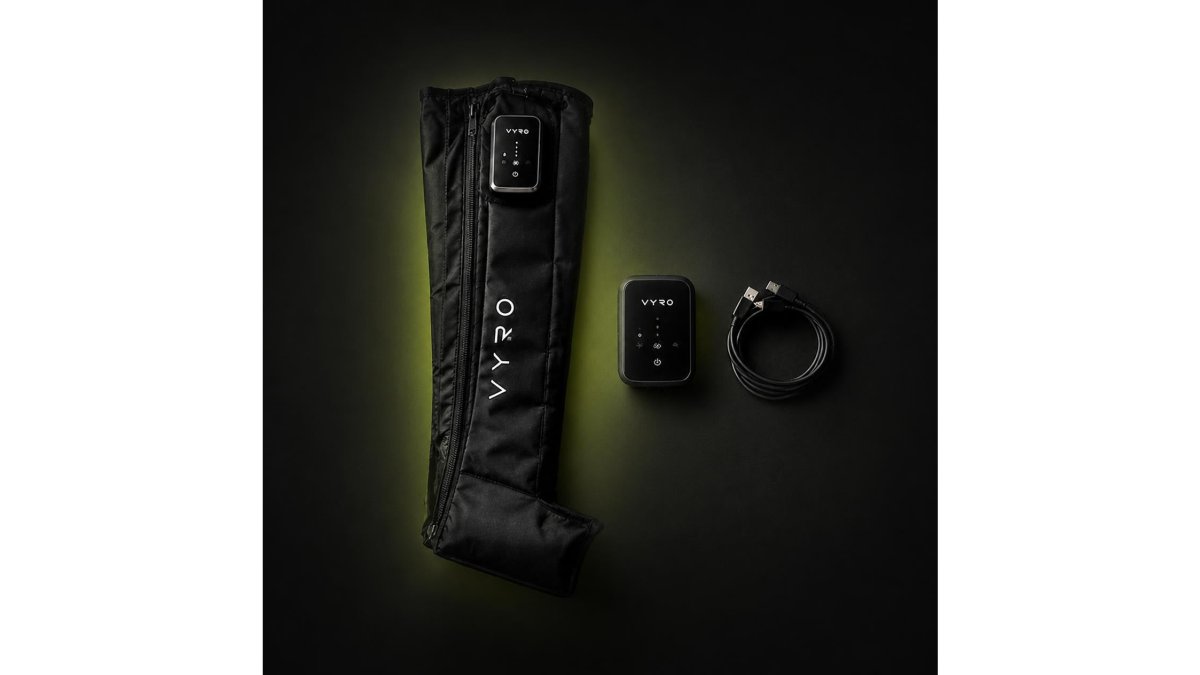
Setup takes under two minutes once you've done it a few times. VYRO Full Leg Massage Boots come fully assembled, just charge them, put them on, and press start.
Adjusting Leg Positioning and Elevation
Leg positioning affects how well the compression works and how comfortable the session feels:
- Elevate your legs slightly. Your feet should be at or above hip height. This helps blood flow naturally back toward your heart while the boots compress.
- Keep your knees slightly bent. A fully straight leg can feel uncomfortable during compression. A 10 to 15 degree bend in your knee is ideal.
- Support your back. Use a pillow or recline your chair so your upper body is supported. You shouldn't be lying flat on your back.
- Relax your leg muscles. Don't tense or flex during a session. The boots do all the work.
If your legs feel numb or tingly, adjust your position, shifting your hips back or raising your legs often fixes it. Numbness usually means the boots are sitting too tight on one area.
Choosing the Right Compression Boots Pressure Settings
Compression intensity is measured in pressure levels, usually 1 to 9.
Beginner pressure (levels 1-3): Start here if you're new or have sensitive legs.
Moderate pressure (levels 4-6): This is where most people settle long-term. You feel a clear massaging sensation, but it's not painful or uncomfortable.
High pressure (levels 7-9): Use these only after your legs are used to compression.
A simple rule: if it hurts or causes numbness, it's too intense. Dial it back. Effective compression should feel like a firm massage, not pain.
Building a Daily Compression Boots Routine by Training Load
How often you use compression boots depends on your activity level and training. Here's how to build a routine that fits your life.
Recovery for Endurance Athletes and Runners
Endurance training breaks down muscle tissue and depletes glycogen stores. Your legs need active recovery to bounce back fast.
Daily or near-daily use works best for runners and endurance athletes. Use compression boots 5 to 6 days per week, especially on days when you run hard or do long distances.
- After easy runs: One 20-minute session is enough.
- After tempo runs or intervals: Use 25 to 30 minutes at moderate pressure (levels 4-6).
- After long runs: Use 30 minutes at moderate to high pressure the same day, then again the next morning.
- Rest days: Skip compression boots or use a light 15-minute session at low pressure if your legs still feel heavy.
This keeps blood flowing through your legs consistently, reducing soreness so you can train harder the next day.
Recovery for Strength Training and Lifting
Strength work creates different demands than endurance training. Your muscles need recovery time between sessions, but you're not training daily like a runner.
3 to 4 times per week is ideal for lifters. Use compression boots on your heaviest training days and the day after.
- After leg day: Use 25 to 30 minutes at moderate to high pressure.
- After upper body days: A light 20-minute session at low to moderate pressure still helps overall recovery.
- On rest days: Skip compression boots unless your legs feel particularly sore.
- Before a deload week: Use compression boots daily for 3 to 4 days to help your body fully recover.
This keeps your legs fresh without overusing the boots on days you're not stressing your leg muscles.
Recovery for Workers on Their Feet All Day
Nurses, hospitality staff, tradespeople, and others who stand or walk for 8 to 12 hours face constant leg fatigue with no true break during their shift.
Daily use is appropriate for this group. Use compression boots every evening after work.
- Standard shift (6-8 hours): One 20 to 25 minute session at moderate pressure (levels 4-6).
- Long shift (10-12 hours): One 30-minute session at moderate pressure, or two 15-minute sessions if your schedule allows.
- Days off: Optional. If your legs still feel heavy, use a light 15-minute session. If you feel recovered, skip it.
This addresses the cumulative fatigue that builds through your workweek, stay consistent and your legs will feel lighter and less achy by Friday.
Compression Boots Safety and Contraindications: When to Avoid or Adjust
Compression boots are safe for most people, but certain conditions mean you should check with a healthcare provider before using them.
Avoid compression boots if you have:
- Active deep vein thrombosis (DVT) or a history of blood clots in your legs
- Acute infection or fever in your legs
- Open wounds, severe cuts, or fresh surgical incisions on your legs
- Severe varicose veins with active inflammation
- Uncontrolled high blood pressure (over 180/110 mmHg)
- Heart failure or severe cardiac conditions
Use with caution if you have:
- Diabetes with numbness in your feet or legs. Start at very low pressure (level 1-2) and monitor for any unusual sensations.
- Neuropathy or nerve damage. The compression might mask pain signals you need to feel.
- Pregnancy. Consult your doctor first, especially if you have a history of blood clots.
- Recent surgery or injury. Wait until your healthcare provider clears you for compression therapy.
If you're unsure whether compression boots are safe for you, ask your GP or a physiotherapist. Most people can use them safely, but it's worth confirming if you have any of the conditions listed above.
Maintaining Your Compression Boots for Long-Term Use
Compression boots are durable, but they need basic care to keep working well. VYRO Full Leg Massage Boots are built to last with proper maintenance.
Cleaning:
- Wipe down the exterior fabric with a damp cloth after each use.
- Check the air hose for dirt or debris and clean gently if needed.
- Do not submerge the boots in water or use a washing machine.
- Air dry completely before storing.
Battery and charging:
- Charge your boots fully after every 3 to 4 uses.
- VYRO boots hold a charge for up to 6 hours and recharge in about 2 hours.
- Store in a cool, dry place away from direct sunlight.
- Avoid leaving the battery completely drained for long periods.
Storage:
- Keep boots in a cool, dry location when not in use.
- Store the air hoses loosely coiled, not kinked or twisted.
- Keep the controller in a safe place where it won't be dropped or crushed.
Inspection:
- Check the fabric seams and zips monthly for wear.
- Look for small tears or holes in the air chambers.
- Test all pressure levels and massage modes regularly to ensure they're working.
If you notice a leak, reduced pressure, or a mode that stops working, contact VYRO support.
Regular maintenance takes just a few minutes and keeps your boots working like new for years.
Using compression boots daily is one of the simplest ways to speed up recovery and feel fresher during your next training session or workday.
VYRO Full Leg Massage Boots make daily recovery accessible. The 1-year warranty and 14-day returns mean you can try them. Shop VYRO Full Leg Massage Boots and discover how daily compression recovery changes your performance and how you feel.
Frequently Asked Questions
How long should you use compression boots in one session?
Most users benefit from 20-30 minute sessions with compression boots. Beginners should start at 20 minutes to allow their legs to adapt to the air pressure and massage-like sensation. As you become comfortable, sessions can extend to 30-45 minutes depending on your recovery needs and training intensity. The VYRO Full Leg Massage Boots support flexible session lengths, so you can adjust based on how your legs feel and your daily schedule.
Should you use compression boots before or after exercise?
Post-workout recovery is the most effective timing for compression boots. After intense exercise, your muscles experience inflammation and soreness. Using compression boots within a few hours after your session promotes blood flow and lymphatic drainage, helping reduce muscle soreness and accelerate recovery. Some athletes also use them on rest days for general leg recovery. Avoid using compression therapy immediately before exercise, as it may reduce your performance during the workout itself.
Can you use compression boots every day?
Yes, compression boots are safe for daily use when used correctly. Athletes and workers on their feet all day can benefit from daily sessions. However, frequency depends on your training load and recovery needs. Endurance athletes might use them three to four times weekly after intense sessions, while shift workers or those with chronic leg fatigue may use them daily. Start with three sessions per week and gradually increase based on comfort and results. Always monitor how your legs respond and adjust pressure settings accordingly.
What pressure setting should you use on compression boots?
Begin with a moderate intensity pressure setting that feels comfortable but firm around your legs. The VYRO Full Leg Massage Boots offer 9 pressure levels to suit different comfort preferences. Beginners should start at levels 3-5 and gradually increase as your legs adapt to the sensation. Higher pressure settings (levels 7-9) deliver more intense compression and are better for experienced users or those seeking maximum recovery stimulus. Never jump to maximum pressure immediately; gradual increase prevents discomfort and allows your body to respond positively to the therapy.