

Table of Contents
- How to Speed Up Muscle Recovery: What Actually Works
- Foods for Muscle Recovery: What to Eat After Training
- Managing Muscle Soreness After a Workout
- Muscle Recovery Tools: From Foam Rollers to Compression Boots
- Compression Boots for Recovery: How They Fit Your Routine
- Cold-Water Immersion and Ice Baths: Worth the Shiver?
- Sleep, Rest Days, and Active Recovery: The Non-Negotiables
- Building Your Recovery Plan: Timing and Tracking
- Frequently Asked Questions
Last Updated: October 8, 2026
How to Speed Up Muscle Recovery: What Actually Works
Muscle recovery is the process your body uses to repair muscle fibres, replenish energy stores and rebuild tissue after training stress.
The uncomfortable truth is that most recovery advice is either obvious or oversold. Ice baths feel heroic. Compression boots feel luxurious. Neither replaces sleep.

Below, we cover the recovery methods worth your time, how to eat for muscle repair, how to tell normal soreness from injury, and how to build a weekly plan you will actually follow.
Foods for Muscle Recovery: What to Eat After Training
The best foods for muscle recovery combine protein for muscle repair with carbohydrates to refill glycogen. Practical choices include Greek yoghurt with fruit, eggs on wholegrain toast, chicken with rice, or a protein shake with a banana when you are short on time.
Timing matters less than total intake, but eating within a couple of hours of training helps. A common mistake is under-eating protein on rest days, exactly when repair is happening.
Protein and Carbohydrates: The Recovery Pair
Protein supplies the amino acids your body uses to rebuild muscle fibres; carbohydrates restock the glycogen you burned during intense exercise. Most active people do well aiming for a palm-sized protein portion at each meal and building carbohydrates around training sessions.
- Within 2 hours of training: protein plus carbohydrate, such as a shake with banana
- Through the day: spread protein across 3-4 meals rather than one large serve
- Hydration: water with electrolytes after heavy sweating, especially in warm conditions
Supplements are optional. Creatine has the strongest evidence base for supporting strength work, while most other recovery supplements are far less convincing. Food first.
Managing Muscle Soreness After a Workout
Muscle soreness after a workout is normal, peaking roughly 24 to 72 hours after unfamiliar or intense exercise. This is delayed-onset muscle soreness, or DOMS, and it eases with time, light movement and sleep.
What helps: easy walking, gentle stretching, adequate protein, and pressure-based tools like foam rolling or compression. What does not help much: pushing through a second heavy session while still sore.
Normal DOMS vs. Injury: How to Tell the Difference
Normal DOMS is a dull, diffuse ache across a muscle group, worse when you first move and better once warmed up. It affects both sides symmetrically after a hard session.
See a health professional if you notice:
- Sharp or localised pain in one spot
- Swelling, bruising or visible deformity
- Dark urine after intense exercise, which can signal a medical emergency (Rhabdomyolysis)
If it does not fit the DOMS pattern, treat it as an injury until proven otherwise.
Muscle Recovery Tools: From Foam Rollers to Compression Boots
Muscle recovery tools range from inexpensive to premium, and they work through the same basic mechanism: mechanical pressure that helps reduce muscle tension and improve how your legs feel. Foam rollers and massage guns are the budget end; compression boots sit at the top.
Here is how the main options compare:
| Tool | Best For | Effort Required | Portability |
|---|---|---|---|
| Foam roller | Self-massage, tight spots | High, you do the work | High |
| Massage gun | Targeted knots, small areas | Medium | High |
| Compression boots | Full-leg recovery, tired legs | None, you relax | Medium |
Foam rolling and massage work well for spot treatment. Full-leg compression is the better fit when the whole leg feels heavy, which is the norm after long runs, heavy lifting or a shift on your feet.
Compression Boots for Recovery: How They Fit Your Routine
Compression boots for recovery use rhythmic air pressure to massage the legs from foot to upper thigh.
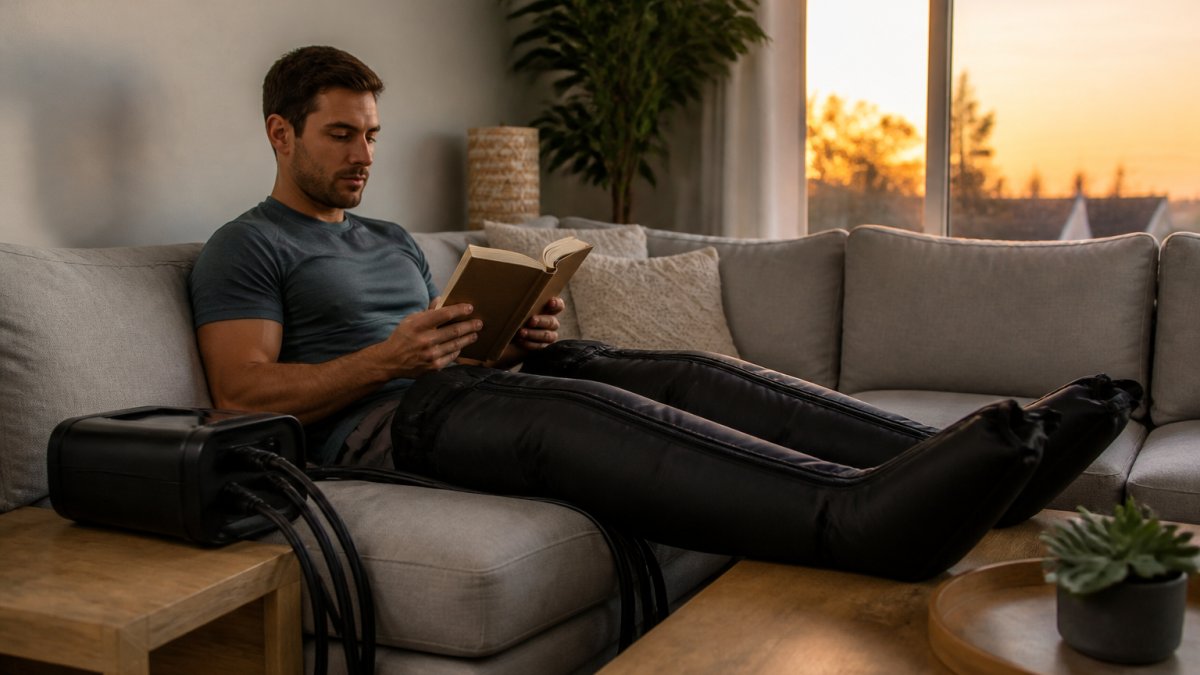
At VYRO, our Full Leg Massage Boots are built for exactly this: 9 pressure levels, 6 massage modes, and built-in heat, all controlled from an LCD controller.
If you have sensitive skin or circulation concerns, start on the lowest pressure level and check with your doctor before regular use.
Cold-Water Immersion and Ice Baths: Worth the Shiver?
Cold-water immersion (CWI) is the most researched recovery tool after sleep and nutrition, and also the most misunderstood. It reliably takes the edge off how sore you feel, but it does not repair muscle faster, and used at the wrong time it can work against the adaptation you trained for.
What it actually does
Cold exposure triggers vasoconstriction (blood vessels narrow), which reduces blood flow and swelling in the treated area, and dampens the inflammatory signalling that drives part of the soreness response. That is why it feels good: it is blunting the signal, not accelerating the repair. The discomfort of DOMS is a symptom, not the mechanism of recovery, so reducing it does not automatically mean you have recovered faster.
Dose and timing
A common protocol is water at roughly 10-15°C for 5-15 minutes, or a contrast routine alternating 1 minute cold and 2-3 minutes warm for 3-5 rounds. Longer is not better, beyond about 15 minutes the main effect is discomfort, not recovery. If you are new to it, start at the warmer end of the range and shorter duration.
When it helps, and when it backfires
- After competition or a one-off brutal session where you need to function the next day: useful. Soreness relief and perceived freshness are the realistic wins.
- Immediately after strength or hypertrophy work: skip it. Some evidence suggests regular post-lifting cold immersion can blunt muscle protein synthesis and reduce long-term muscle and strength gains. If you are chasing size or strength, save it for a non-lifting day.
- As a standalone recovery strategy: no. It does not replace sleep, protein or easy movement.
Practical decision rule
Ask one question: am I recovering for performance tomorrow, or adapting for performance in eight weeks? If tomorrow, cold immersion is a reasonable tool. If eight weeks, prioritise sleep, protein and easy movement, and leave the ice bath for competition days or deload weeks.
If you want the soreness-relief effect without the adaptation trade-off, full-leg compression and easy movement give you most of the same 'feel fresher tomorrow' benefit with none of the interference.
Sleep, Rest Days, and Active Recovery: The Non-Negotiables
Sleep is the single most effective recovery tool available, and it is free. Most adults need 7-9 hours, and athletes chasing performance often need more. Deep sleep is when growth hormone release peaks and muscle repair accelerates.
Rest days do not mean doing nothing. Active recovery, such as an easy walk, a swim or a light cycle, increases blood flow to tired muscles without adding meaningful training stress.
- Sleep: consistent bed and wake times, dark cool room
- Rest days: at least one per week, more during heavy training blocks
- Active recovery: 20-40 minutes of easy movement
Building Your Recovery Plan: Timing and Tracking
Most recovery advice stops at 'sleep more and eat protein'. What competitors rarely give you is a timeline, a way to manage training load, and a way to know whether your recovery is actually working. This section covers all three.
The recovery timeline: what to do, and when
Recovery is not one event; it is a sequence. Map your actions to the clock rather than treating recovery as a single post-workout ritual.
| Window | What to do | Why |
|---|---|---|
| 0-30 min post-session | Protein plus carbohydrate; rehydrate with electrolytes if you sweated heavily | Starts repair and glycogen refill while the muscle is most receptive |
| 30 min - 2 hrs | Easy walk, light mobility, shower | Restores blood flow without adding training stress |
| Evening | Compression boots or foam rolling; prioritise sleep timing | Mechanical pressure eases tension; sleep is where most repair happens |
| Next morning | Check soreness, sleep and freshness before deciding load | Turns recovery into a decision, not a guess |
| 24-72 hrs | Expect peak DOMS; keep movement easy, keep protein high | Soreness peaks in this window and eases with light activity |
| Day 3+ | If soreness is still climbing, reduce load | Persistent soreness is a load-management signal, not a toughness test |
Manage training load, not just recovery
Recovery is downstream of workload. A common pattern is to add recovery tools while quietly increasing volume and intensity, which is like bailing out a boat without plugging the hole. Practical rules:
- One hard session, one easy day. Avoid stacking two high-intensity sessions back to back.
- Increase weekly volume by no more than about 10%. Bigger jumps are a common trigger for persistent soreness and overuse niggles.
- Plan a deload every 4-6 weeks, reduce volume by roughly a third while keeping some intensity.
Track three things, not thirty
You do not need a wearable to track recovery well. Three simple metrics, recorded each morning, will tell you more than any single device:
- Soreness (1-10): how do your legs feel on waking, before you move around?
- Sleep hours: did you hit your target, and did you wake feeling restored?
- Readiness (1-10): how fresh do you feel about the next session?
Look at the trend, not the day. A single bad morning means little; three consecutive mornings of rising soreness and falling readiness means your training load is outrunning your recovery. That is your cue to reduce volume, add a rest day, or both.
Personalise by context
There is no universal plan, only the one that matches your load and your life:
- Strength training: protein spread across the day matters most; skip cold immersion right after lifting if muscle growth is the goal.
- Endurance training: carbohydrate and glycogen refill dominate; cold immersion after long or race-pace sessions is more defensible.
- Beginners: DOMS is highest in the first few weeks of a new programme. Expect it, keep sessions moderate, and do not add recovery tools to compensate for too much too soon.
Frequently Asked Questions
What are the signs of poor muscle recovery?
Signs include persistent soreness lasting more than 72 hours, reduced performance in your next session, trouble sleeping, a higher resting heart rate, and feeling unusually fatigued. If your legs still feel heavy days after a workout, your body is telling you it hasn't bounced back. Prioritise sleep, protein, hydration, and light movement. Recovery tools like compression boots can help ease that heavy feeling, but they work best alongside the basics.
How can I reduce muscle soreness after a workout?
Start with the fundamentals: drink water, eat protein and carbs within a couple of hours, and get 7-9 hours of sleep. Light movement like walking or easy cycling increases blood flow without adding strain. A warm shower or bath can relax tight muscles. For targeted relief, 15-20 minutes in compression boots for recovery helps move fluid and ease that heavy, tight feeling. Foam rolling and gentle stretching also help, but keep it comfortable, not painful.
Do compression boots help with muscle recovery?
Compression boots apply rhythmic air pressure to your legs, which may help reduce swelling, ease tightness, and improve circulation. Many people find their legs feel lighter and less achy after a session. They're not a magic fix, but they're a convenient tool for post-workout or end-of-day relief, especially if you're on your feet a lot. Look for adjustable pressure and a full-leg design, like the VYRO Full Leg Massage Boots.
What should I eat after exercise to support muscle recovery?
A mix of protein and carbohydrates is your best bet. Protein helps repair muscle fibres, while carbs replenish glycogen stores. Aim for 20-30 grams of protein and a similar amount of carbs within a few hours of training. Good options include a chicken and rice bowl, Greek yoghurt with fruit, eggs on toast, or a smoothie with milk, banana, and oats. Chocolate milk is a convenient post-run choice. Don't forget fluids and electrolytes if you've sweated heavily.
Can muscles recover in 2 days?
It depends on the workout and your fitness level. Mild soreness from a new routine often fades within 24-48 hours. After a heavy leg session or a long run, full recovery can take 48-72 hours or more. Sleep, nutrition, and active recovery all influence the timeline. If you're still sore after three days, take it easy and avoid training the same muscle group hard again until the soreness settles.
Does massage help muscles recover faster?
Massage can reduce muscle tension, improve blood flow, and make you feel less sore, which supports recovery. It doesn't magically repair muscle damage, but it helps you feel better and move more comfortably. If professional massage isn't practical, a massage gun or compression boots can deliver similar benefits at home. Even 10-15 minutes of self-massage can take the edge off tight, tired legs.