

Table of Contents
- What 'Cement Legs' Actually Feels Like
- Heavy Legs Causes: Why Your Legs Feel Like Cement
- Heavy Legs After Exercise: When Training Goes Too Far
- When to Worry: A Triage Guide for Heavy Legs
- How to Relieve Heavy Legs at Home
- Compression Boots for Recovery: What to Look For
- Conclusion
- Frequently Asked Questions
Last Updated: October 12, 2026
What 'Cement Legs' Actually Feels Like
If you're wondering why do my legs feel like cement, you're describing a heavy, leaden sensation that makes every step a chore, a deep, dragging weight, not just tiredness.
Cement legs is the everyday term for a heavy, tight, fatigued feeling in the lower limbs, from mild stiffness to a density that makes lifting your foot feel like wading through wet concrete.
Most cases trace back to a handful of causes, some harmless, a few needing urgent care. Here's how to tell the difference and what to do.
Better Health Channel on leg pain and circulation
Heavy Legs Causes: Why Your Legs Feel Like Cement
Heavy legs causes fall into three groups: circulation problems, muscle fatigue, and underlying medical conditions. Pinpointing yours is the first step toward relief.
Venous Insufficiency and Blood Pooling
Venous insufficiency happens when the valves in your leg veins stop pushing blood back up to your heart efficiently. Blood pools in the lower legs, creating that heavy, cement-like feeling.
Common signs include:
- Swelling around the ankles
- Aching that worsens through the day
- Visible varicose or spider veins
Prolonged Sitting, Standing, and Muscle Fatigue
Your calf muscles act as a pump, squeezing veins to push blood upward every time you move. Sit or stand for hours and that pump goes quiet, blood pools, and your legs feel stiff and heavy, a feeling nurses, hospitality staff, tradies, and long-haul travellers know well.
Medication and Systemic Causes
Some medications cause leg heaviness as a side effect, as can thyroid problems, anaemia, or kidney issues. If it came on suddenly with a new medication, mention it to your doctor, don't stop any prescription on your own.
Heavy Legs After Exercise: When Training Goes Too Far
Heavy legs after exercise usually signal muscle fatigue or overtraining, not disease. But the line between "good hard session" and "too much" is thinner than most athletes think.
Watch for these signs that you've crossed it:
- Legs feel heavy for more than 48 hours
- Performance drops across multiple sessions
- Poor sleep and low motivation
A common mistake is pushing through. Muscle endurance builds with recovery, not just load. If your legs feel like cement the morning after a session, back off with an easy walk, hydration, and sleep before your next hard effort.
When to Worry: A Triage Guide for Heavy Legs
Most heavy legs are not an emergency, but some symptoms need urgent attention within minutes. Use this triage guide to decide fast.
Call emergency services immediately if you have:
- Sudden swelling in one leg only
- Warm, red, or discoloured skin on one leg
- Chest pain or shortness of breath
Those last three matter because a clot in a deep leg vein can travel to the lungs, a medical emergency, not a wait-and-see problem.
A Symptom-Based Decision Tree
Narrow things down by asking yourself six questions.
1. One leg or both?
- One leg only, especially with swelling, warmth, or redness: treat as possible DVT until a clinician says otherwise. Seek urgent care.
- Both legs: more often points to venous insufficiency, medication effects, fluid retention, or systemic conditions.
2. How did it start?
- Sudden onset over minutes to hours: urgent assessment.
- Gradual over days to weeks: routine appointment is usually appropriate.
- Long-standing and fluctuating: routine appointment, but track the pattern.
3. What time of day is it worst?
- Worse as the day goes on and better with elevation: typical of venous pooling.
- Worse in the morning or after rest: can suggest inflammatory or systemic causes.
- Worse with walking and better with rest: can suggest arterial narrowing, which also needs prompt review.
4. What makes it better or worse?
- Better with movement and elevation: usually position- or vein-related.
- Worse with heat, better with cold: can point to nerve or inflammatory issues.
- No position helps: worth a routine appointment sooner rather than later.
5. Is there swelling, and where?
- Ankle and lower-leg swelling that improves overnight: common with venous insufficiency.
- Swelling that pits when you press it and does not improve: needs medical review.
- Swelling in one calf with pain: urgent.
6. What else is going on?
- Breathlessness, chest pain, or a racing heart: emergency.
- Fatigue, pallor, or unusual cold intolerance: routine appointment to check bloods and thyroid.
- New medication in the last few weeks: routine appointment, and do not stop the prescription on your own.
Deep Vein Thrombosis and Warning Signs
Deep vein thrombosis (DVT) is a blood clot in a deep leg vein (Deep vein thrombosis (DVT) - symptoms, signs and treatment). It's serious because the clot can break loose and travel to the lungs, causing a pulmonary embolism.
Warning signs include:
- Swelling in one leg, not both
- Cramping or throbbing pain, often in the calf
- Skin that is warm to touch
If you spot these, seek urgent care. Do not massage the leg, do not apply heat, and do not wait it out. Massaging a suspected clot can dislodge it.
What to Expect During a Clinical Evaluation
Your doctor will likely start with questions about timing, triggers, medication, travel, recent surgery, and family history of clots. Then a physical exam, checking pulses, swelling, skin colour, and calf tenderness.
From there, they may order:
- A Doppler ultrasound to check blood flow and look for clots
- Blood tests for clotting markers, anaemia, thyroid function, or kidney function
- An ankle-brachial index to compare blood pressure in the ankle and arm, which helps screen for peripheral artery disease
Being honest about how long it's been happening helps, as does tracking symptoms day to day, which leg, what time, what you were doing beforehand. A phone note or diary is enough.
Peripheral Artery Disease and Other Circulation Problems
Not all heavy legs come from veins. Peripheral artery disease (PAD) narrows the arteries supplying the legs, so muscles don't get enough blood during activity.
The classic pattern is cramping or heaviness in the calf, thigh, or buttock that comes on with walking and eases within minutes of stopping.
Other circulation problems that can cause heaviness include:
- Chronic venous insufficiency, where valves fail over time
- Lymphedema, where lymph fluid builds up and causes firm swelling
- Blood vessel compression syndromes, which are less common but can cause positional heaviness
If your heaviness reliably comes on with a set distance of walking and eases with rest, mention that pattern to your doctor.
How to Relieve Heavy Legs at Home
Most everyday cases respond well to simple habits. Here's how to relieve heavy legs at home, and where home care stops being enough.
Australian Prescriber on compression therapy
Leg Elevation, Movement, and Compression Stockings
Three basics do most of the work:
- Leg elevation. Lie down and raise your legs above heart level for 15-20 minutes, a few times daily. Elevating in a chair with your feet on a stool helps less, because the legs stay below the heart.
- Movement. Walk every 30-60 minutes if you sit or stand for work. Flex your ankles at your desk and pump your calves 10-20 times each hour, the calf muscles are the pump that pushes blood upward, so using them regularly matters more than any single long walk.
- Compression stockings. These squeeze the legs gently to help blood flow upward. Fit matters more than brand, so measure your ankle and calf circumference and follow the sizing chart.
Evidence and Safety Limits for Home Treatments
Home care works best for tired, achy legs from activity or position, but it has limits.
What the evidence supports:
- Elevation and movement reliably ease position-related heaviness.
- Graduated compression can reduce swelling and heaviness in venous insufficiency, strongest when stockings are correctly fitted and worn consistently.
- Walking and calf raises build the muscle pump over time.
What the evidence does not support:
- Massage and heat feel good but won't fix a circulation problem. Treat the cause, not just the feeling.
- Compression boots and pneumatic devices can help recovery and swelling.
- No home remedy can rule out DVT, PAD, or another vascular condition.
When compression needs clinician guidance:
- If you have known arterial disease, heart failure, or diabetes with poor circulation, do not start compression without medical advice. Compression can worsen arterial problems if the pressure is wrong.
- If you have open wounds, active skin infections, or severe neuropathy, get fitted by a clinician rather than buying online.
- If you are pregnant, ask your midwife or doctor before using compression, even though it is often recommended.
Skip home remedies and see a doctor if:
- One leg is swollen and the other is not
- Pain is getting worse, not better
- You have a history of clots or heart problems
Other Medical Conditions That Can Cause Leg Heaviness
Beyond veins and arteries, several systemic conditions can make legs feel like cement:
- Anaemia, where low red blood cells reduce oxygen delivery to muscles
- Thyroid disorders, especially hypothyroidism, which can cause muscle weakness and fatigue
- Kidney disease, which can cause fluid retention and swelling
If your heaviness came on with a new medication, mention it to your doctor. Do not stop any prescription on your own.
Movement, Walking, and Leg Exercises
A simple daily routine helps more than occasional intense effort:
- Ankle pumps: 20 reps, several times a day, especially during long sitting.
- Calf raises: 10-15 reps, two to three times a day, to build the muscle pump.
- Walking: a brisk 20-30 minute walk most days, breaking up long periods of sitting.
If walking brings on heaviness at a consistent distance and rest eases it within a few minutes, note that pattern and mention it to your doctor, a useful clue pointing toward arterial rather than venous causes.
Compression Boots for Recovery: What to Look For
Compression boots for recovery use rhythmic air pressure to mimic the calf pump, squeezing and releasing in waves from foot to thigh to move fluid and ease that heavy feeling.
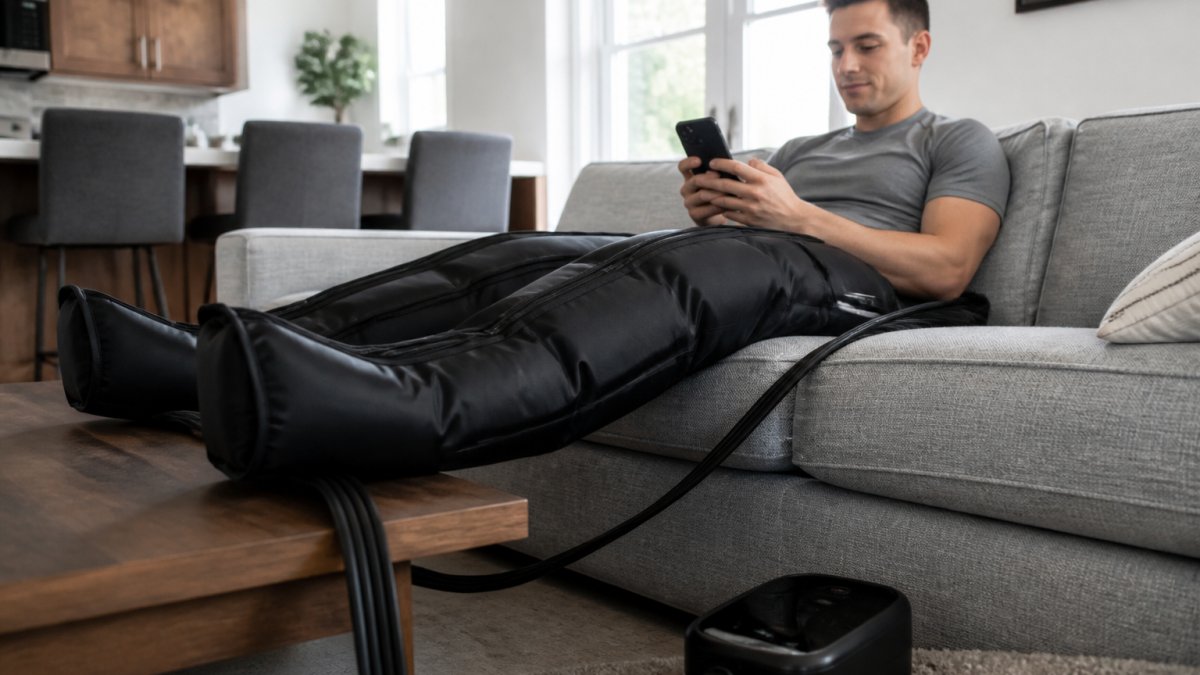
Here's what separates a good pair from a gimmick:
- Full-leg coverage. Foot to upper thigh beats calf-only sleeves.
- Adjustable pressure. Look for multiple levels so you can dial in comfort.
- Multiple modes. Different rhythms suit different needs.
Our VYRO Full Leg Massage Boots tick those boxes. You get 9 pressure levels, 6 massage modes, built-in heat, and up to 6 hours of battery life.

At $299.99, they cost a fraction of other compression systems out there. And they come with a 1-year warranty and 14-day returns.
If you're on your feet all day, a 20-minute session after your shift can help you reset before bed. No appointments. No setup. Just switch on and settle in.
Conclusion
Heavy, cement-like legs are your body's way of asking for attention. Most of the time, the fix is simple: move more, elevate, and recover properly. But some symptoms need a doctor, not a home remedy.
If your legs feel heavy after training, long shifts, or travel, a recovery routine makes a real difference.
Shop now and give your legs the reset they've been asking for.
Frequently Asked Questions
Why do my legs feel heavy and tired?
Heavy, tired legs often come from blood pooling in the lower legs when you sit or stand for long periods. Venous insufficiency, where vein valves struggle to push blood back to the heart, is a common cause. Other factors include muscle fatigue, overtraining, dehydration, and some medications. If the feeling is new, persistent, or one-sided, get it checked by a doctor to rule out more serious circulation problems.
Can poor circulation make your legs feel heavy?
Yes. Poor circulation is one of the most common reasons for heavy legs. When veins can't return blood efficiently, it pools in the lower legs and creates that cement-like heaviness. Peripheral artery disease and chronic venous insufficiency both affect circulation and can cause aching, swelling, and fatigue. A doctor can assess your circulation with a simple exam and, if needed, an ultrasound.
How can I relieve heavy legs at home?
Try elevating your legs above heart level for 15 to 20 minutes, moving regularly, and wearing compression stockings if recommended. Compression boots for recovery use rhythmic air pressure to massage the legs and help move fluid, which many people find useful after long shifts or workouts. Stay hydrated, avoid standing still for hours, and see a doctor if symptoms don't improve.
Can compression boots help with tired, heavy legs?
Compression boots apply sequential air pressure from foot to thigh, which may help ease the heavy, tight feeling in your legs and support circulation. They're popular with runners, nurses, and tradespeople who spend long hours on their feet. A full-leg system like VYRO's covers foot to upper thigh with adjustable pressure and heat. If you have a diagnosed circulation condition, check with your doctor before use.
Medical disclaimer: This article is general information only and is not a substitute for professional medical advice. If you have persistent, severe, or one-sided leg symptoms, see a doctor.