

Table of Contents
- How Do Compression Recovery Boots Work
- Why Compression Boots Help Tired and Heavy Legs
- How Long to Use Compression Boots for Best Results
- Step-by-Step Guide to Using Your Compression Boots
- Compression Boots for Recovery After Running
- Who Should Not Use Compression Boots
- Common Mistakes to Avoid When Using Compression Boots
- Frequently Asked Questions
Last Updated: October 11, 2026
How Do Compression Recovery Boots Work
Understanding how compression boots help tired legs starts with their basic mechanism: they use rhythmic air pressure to massage your legs in a wave-like pattern. Air chambers inflate and deflate in sequence, starting at your feet and moving up toward your thigh. This gentle, rhythmic pressure mimics the natural muscle contractions that help move blood back toward your heart.

The technology is straightforward but effective. Most compression boots offer multiple pressure levels and massage modes so you can customize the intensity. Built-in heat adds warmth, which many users find soothing after a long day or intense training session. You simply slip your legs in, select your settings on the LED controller, and let the boots do the work while you relax.
Why Compression Boots Help Tired and Heavy Legs
Compression boots are marketed as recovery tools, and many users report feeling relief from tired, heavy legs. Understanding what the evidence actually shows, and what remains unproven, helps you set realistic expectations.
What compression boots likely do
One key way how compression boots help tired legs is by applying rhythmic air pressure that encourages blood and fluid movement toward the heart. This mechanism is sound: the sequential inflation mimics the muscle pump action that occurs during walking or exercise. Most users report subjective improvements in leg heaviness and comfort after sessions, particularly when used regularly.
The boots can reduce temporary swelling (oedema) in the legs, especially after prolonged standing or intense training. This is a measurable, observable benefit. If your legs feel noticeably puffy after a long shift or hard workout, compression therapy may help them return to normal size more quickly.
What the evidence does not clearly show
While compression therapy is well-established in clinical settings for conditions like lymphoedema and venous insufficiency, the evidence for athletic recovery in healthy people is mixed. Studies on whether compression boots speed muscle recovery, reduce soreness, or improve performance show inconsistent results. Some research suggests modest benefits; other studies find no significant difference compared to rest alone.
The claim that compression boots "flush metabolic waste" or "remove lactic acid" is often overstated. Lactic acid clears naturally within hours of exercise regardless of compression. Improved circulation may support recovery, but this does not automatically translate to faster healing or reduced soreness in all cases.
Perceived relief versus measured outcomes
Many runners, nurses, and people on their feet all day report feeling fresher after a session. This subjective improvement is real and valuable, comfort and relaxation matter. However, subjective feelings of relief do not always correlate with measurable changes in recovery speed, muscle damage, or performance on the next training day.
If you use compression boots and notice your legs feel less heavy, you sleep better, or post-workout soreness seems reduced, those are legitimate benefits worth pursuing. Just recognise that these are your personal experience, not proof that the boots work the same way for everyone or that they speed healing in a measurable way.
The practical takeaway
Compression boots are a low-risk recovery tool that many active people find helpful for comfort and relaxation. They may reduce temporary swelling and support circulation. Whether they meaningfully speed your recovery depends on your individual response and the demands of your training or work. The best way to find out is to use them consistently for 2-3 weeks and track how you feel, rather than expecting dramatic results from a single session.
How Long to Use Compression Boots for Best Results
Most people see the best results with sessions lasting 20 to 30 minutes. This duration is long enough for the rhythmic pressure to work effectively without being so long that it becomes impractical for daily use.
Frequency matters more than duration. Using compression boots regularly, ideally after training or at the end of a work shift, builds cumulative benefits. Many athletes and active people find that daily or near-daily use becomes part of their recovery routine. Start with 3 to 4 sessions per week and adjust based on how your legs respond.
Listen to your body. If you notice your legs feel fresher and less achy after regular sessions, you've found a rhythm that works. Some days you might use the boots for just 15 minutes; other days 30 minutes feels right.
Step-by-Step Guide to Using Your Compression Boots
Getting Started: Setup and First Session
Unpack your compression boots and charge them fully before your first use. Most rechargeable models take about 2 hours to charge and provide up to 6 hours of battery life.
Find a comfortable place to sit or recline. A couch, chair, or bed works well. Slip your feet into the boots starting with your toes, then slide your legs in fully so the boots cover from your feet to your upper thigh.
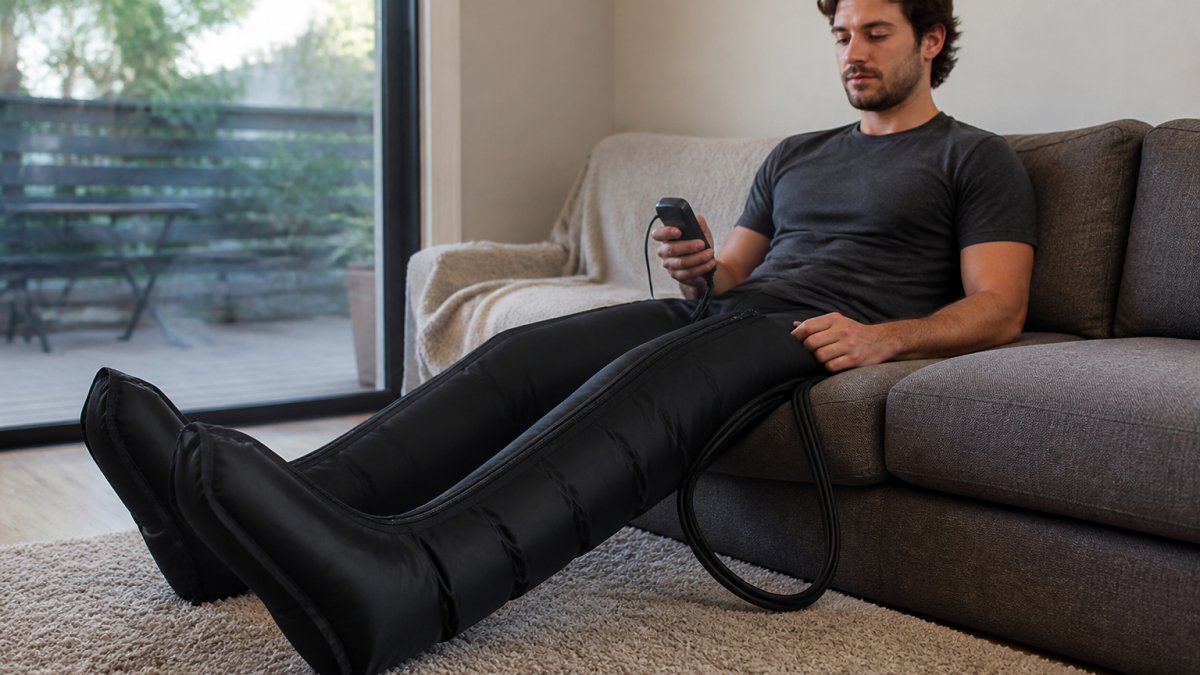
Turn on the boots using the LED controller. Start with pressure level 3 or 4 out of 9 available levels. Begin with a basic massage mode, our boots offer 6 different modes to choose from. Let your legs adjust to the sensation for the first few minutes.
Adjusting Pressure and Massage Modes
After 5 minutes, you can adjust the pressure upward if the current level feels too gentle. Increase by one level at a time. The sensation should feel like a firm hug, not pain or numbness.
Experiment with different massage modes. Some modes focus on rhythmic compression, while others blend compression with pulsing patterns. Try a few different modes across your first few sessions to find what feels best.
If you experience any discomfort, numbness, or tingling, reduce the pressure immediately. Your legs should feel relaxed and supported, never strained.
Building a Recovery Routine
Consistency beats intensity. Use your compression boots at the same time each day if possible, many people find evening sessions work best because legs are most tired then.
Track how you feel. Do your legs feel less heavy the next morning? Is post-workout soreness reduced? These observations help you dial in the right routine for your body.
Most people settle into a pattern of 20 to 30 minute sessions, 4 to 6 days per week. Adjust based on your training schedule and how demanding your work or activity is.
Compression Boots for Recovery After Running
Runners benefit significantly from compression therapy because running creates muscle fatigue and temporary fluid buildup in the legs. A session after your run helps support faster recovery between training days.
The ideal timing is within 2 hours after your run, while your legs are still warm. Use compression boots for 20 to 30 minutes at a moderate pressure level.
Many distance runners use compression boots on hard training days or the day after long runs. This approach helps keep legs feeling fresher for the next session. Some runners use them daily during heavy training blocks.
Who Should Not Use Compression Boots
Compression boots are generally safe for most active people, but certain conditions require caution. If you have deep vein thrombosis (DVT), active blood clots, or severe circulatory problems, consult your doctor before using compression boots. The pressure could be harmful.
People with very sensitive skin or conditions like severe eczema should test the boots carefully on a lower pressure setting first. The contact and friction can sometimes trigger irritation.
If you're pregnant, have uncontrolled high blood pressure, or have had recent surgery on your legs, speak with your healthcare provider before starting compression therapy. These situations may require professional guidance.
Skin infections or open wounds on your legs are another reason to wait. Use compression boots only once your skin has fully healed.
Common Mistakes to Avoid When Using Compression Boots
Pressure and usage errors
The biggest mistake is starting at too high a pressure level. New users often crank the intensity up on day one, which causes discomfort, numbness, or tingling and discourages regular use. Start at pressure level 3 or 4 out of 9, and increase by one level every few sessions as your legs adapt.
Another common error is expecting instant results. Compression boots work best as a regular habit, not a one-time fix. One session may help you feel fresher that evening, but consistent use over 2-3 weeks builds the real benefits.
Skipping sessions because you're "not that sore" defeats the purpose. The boots prevent excessive soreness and fatigue when used regularly. Think of them like brushing your teeth, the benefit comes from consistency, not from waiting until a problem develops.
Finally, don't ignore discomfort signals. Numbness, sharp pain, tingling, or a sensation of restriction means you need to reduce pressure or stop the session immediately. Your legs should feel relaxed and supported, never strained.
Tracking and assessment mistakes
Many users fail to track how the boots actually affect them, making it impossible to know whether they're worth the time and cost. Without a simple measurement system, you're left guessing.
Start by noting three simple metrics before you begin using compression boots:
Perceived heaviness. Rate how heavy or tired your legs feel at the end of the day on a scale of 1-10. Do this for a week before you start using the boots, then again after 2-3 weeks of regular use. A drop of 2-3 points suggests the boots are helping.
Post-exercise soreness. After a hard training session, note how sore your legs feel the next morning (1-10 scale). Track this over several weeks with and without compression boot use.
Visible swelling. If your legs swell noticeably after long shifts or intense workouts, take a simple measurement: use a soft tape measure around your calf at the same spot each time, at the same time of day.
Recovery time. Note how many days it takes for your legs to feel normal again after a hard effort. With regular compression use, some athletes report feeling fresher 1-2 days sooner.
The mistake is not measuring anything at all.
Unrealistic expectations
Do not expect compression boots to replace other proven recovery methods like sleep, nutrition, and active recovery. They are a supplement, not a substitute. If you're chronically under-recovered because you're not sleeping enough or eating well, compression boots alone will not fix that.
Also avoid assuming that one brand or pressure level works for everyone. Your ideal settings depend on your leg size, skin sensitivity, and personal preference. What works for a runner may not suit someone recovering from a long shift on their feet. Experiment within the first 2-3 sessions to find your sweet spot.
Frequently Asked Questions
How long should you use compression boots for?
Most sessions last 20-30 minutes, which is enough time for the rhythmic pressure to promote blood flow and support recovery. Beginners can start with 15-20 minutes to see how their legs respond. You can use compression boots daily, though some people find 3-5 times per week works well for their routine. Listen to your legs, if they feel better after a session, you've found a rhythm that works.
Can compression boots help with tired legs after running?
Yes, compression boots are particularly effective after running because they use gentle, rhythmic pressure to help move blood back toward the heart and reduce temporary swelling in your legs. This can ease the heavy, achy feeling that often follows a run. Using them within a few hours of finishing your run, or even the next day, helps support your muscle recovery and can reduce perceived fatigue so you feel fresher for your next training session.
Who should not use compression boots?
Avoid compression boots if you have active deep vein thrombosis (DVT), severe arterial disease, or acute skin conditions on your legs. If you have diabetes, circulation issues, or sensitive skin, consult your doctor before use. Compression boots are not suitable for people with uncontrolled high blood pressure or those who are pregnant without medical approval. When in doubt, speak with a healthcare professional to confirm compression therapy is safe for your situation.
How do compression recovery boots actually work to reduce leg soreness?
Compression recovery boots deliver intermittent pneumatic compression, gentle waves of air pressure that massage your legs from foot to thigh. This rhythmic pressure helps promote blood circulation and supports the movement of fluid back toward your heart, which can reduce temporary swelling and stiffness. The massaging sensation also encourages muscle relaxation, helping to ease soreness and fatigue after intense activity or a long day on your feet.