

Table of Contents
- What Recovery Boots Do and How Pneumatic Compression Works
- Getting Started: Setup and Your First Session
- Recovery Boots Pressure Settings and Massage Modes
- How Long to Use Recovery Boots Per Session
- When to Use Compression Boots in Your Recovery Routine
- Recovery Boots Safety and Who Should Avoid Them
- Customising Your Protocol by Activity and Recovery Goal
- Care, Maintenance, and Troubleshooting
- Frequently Asked Questions
Last Updated: October 9, 2026
What Recovery Boots Do and How Pneumatic Compression Works
Recovery boots use pneumatic compression to deliver rhythmic air pressure to your legs, a wave-like massage moving from your feet toward your thigh that works recovery boots effectively.
Compression promotes blood flow and fluid movement. When you train hard, running, lifting, or on your feet all day, fluid builds up in your tissues, causing the heaviness and tightness you feel after a tough session.
The key word is rhythmic: not constant pressure like a tight sock. The boots pulse in waves, mimicking natural muscle contractions during movement, that wave-like action is what makes compression boots different from static compression sleeves.
Getting Started: Setup and Your First Session
Unboxing and Assembly
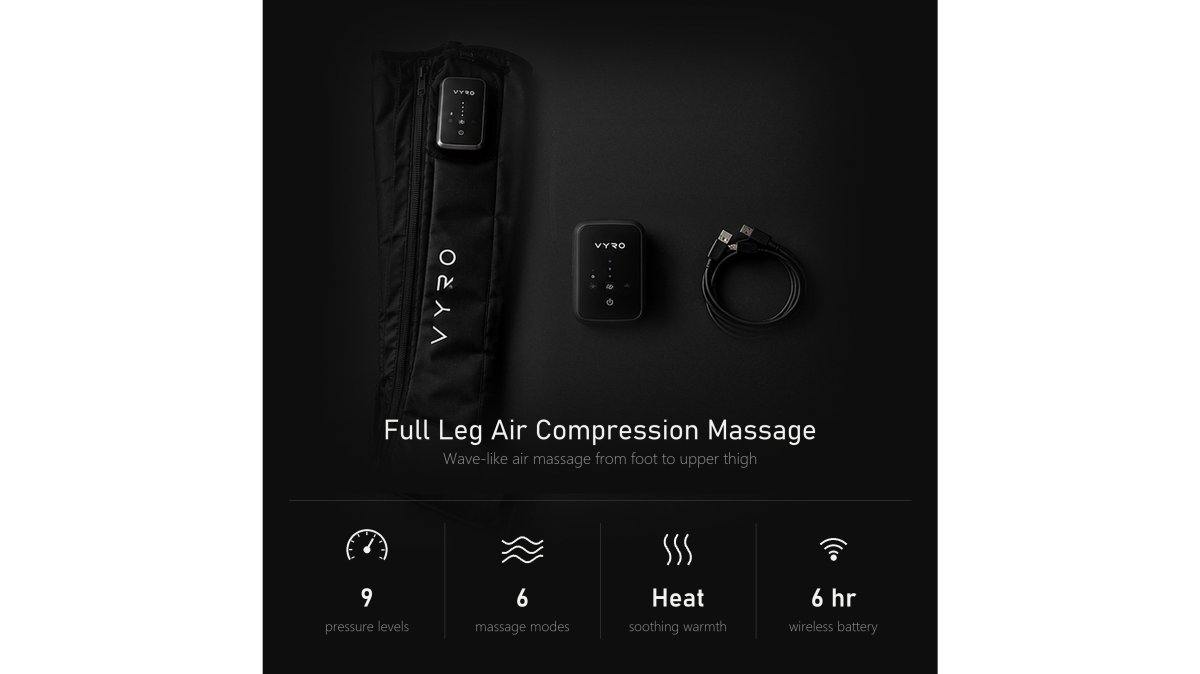
Your VYRO Full Leg Massage Boots arrive fully assembled, two boots and LED controllers, no straps or valves to attach. Unzip them gently, lay them flat, and check the zips move smoothly and the fabric isn't creased inside.

Charge the boots before first use. The rechargeable battery takes about 2 hours to fully charge and gives up to 6 hours of battery life. Plug the charging cable into the controller port on each boot.
Putting on Your Boots
Sit on a couch or bed with your legs stretched out. Unzip each boot fully so it opens like a clamshell, slide your foot in, then pull the boot up over your calf.
Zip up from the bottom toward the top. The zips should glide smoothly; if you feel pinching or the zip catches fabric, unzip, adjust, and try again. A proper fit sits snugly without cutting off circulation.
Powering Up and Selecting Your Settings
Press the power button on your LED controller. The screen shows your pressure level and massage mode. VYRO boots come with 9 pressure levels and 6 massage modes; start your first session low, at level 3 or 4.
Use the + and − buttons to adjust pressure, and the mode button to scroll through massage modes. Each mode delivers the compression wave in a different rhythm, some faster, some slower. Experiment to find what feels right.
Most people spend their first session getting used to the sensation, so don't jump to level 7 or 8. The right setting feels firm but comfortable, a gentle squeeze, not a tight vice.
Recovery Boots Pressure Settings and Massage Modes
Understanding the 9 Pressure Levels
VYRO's 9 pressure levels range from very gentle (1) to quite firm (9). Most users find their sweet spot between levels 4 and 7.
Levels 1-3: Light pressure, good for your first session or recovery days when your legs are already sore.
Levels 4-6: Medium pressure, the most common range for post-workout recovery and daily use after training or long shifts on your feet.
Levels 7-9: Firm pressure, best for heavy leg days or when you want maximum compression to flush out fatigue.
Start at level 3 or 4 and increase by one level every few sessions as your body adapts.
Choosing the Right Massage Mode
The 6 massage modes vary the rhythm and pattern of the compression waves, some deliver quick pulses, others longer, slower squeezes.
Mode 1: Standard wave pattern. Steady, rhythmic compression from foot to thigh. Best for beginners.
Mode 2: Faster pulse. Quicker compression cycles. Good if you want a more energetic feel.
Mode 3: Alternating pattern. Compresses one leg, then the other, in sequence. Useful if you want to focus recovery on one leg.
Modes 4-6: Specialty patterns. Experiment with these once you're comfortable with the basics.
Most people stick with Mode 1 or 2 for regular post-workout recovery; the specialty modes are nice for variety but not necessary for results.
How Long to Use Recovery Boots Per Session
A typical recovery session lasts 20 to 30 minutes. This is long enough to promote circulation and fluid movement without overloading your legs.
First-timers should aim for 20 minutes for their first few sessions to adapt to the sensation and pressure, then extend to 30 minutes once comfortable.
A common mistake is using the boots for only 10 minutes and expecting major results, you need at least 15-20 minutes to meaningfully move fluid and promote recovery. Set a timer.
When to Use Compression Boots in Your Recovery Routine
Timing After Workouts and Training
The best time to use recovery boots is immediately after your workout or training session, within the first 30 minutes if possible. Your muscles are still warm, blood flow is elevated, and your body is primed to recover.
If you can't use them right away, later in the day still helps, many people use them in the evening or before bed, even hours after training.
For runners, using the boots after a long run flushes out fatigue and soreness from extended effort. For strength athletes, a post-workout session helps legs recover faster between training days.
Frequency and Rest Days
Most people see the best results using compression boots 2 to 4 times per week. You don't need to use them every single day.
Use the boots on your hardest days, a long run, heavy leg day, or demanding shift. On lighter or rest days, skip them or use a gentler pressure level.
Think of compression as a recovery tool, not a daily requirement. Your body also recovers through sleep, nutrition, and rest days; the boots are most effective combined with these basics.
Recovery Boots Safety and Who Should Avoid Them
Contraindications and When to Seek Medical Advice
Compression boots are generally safe for most people, but certain conditions mean you should avoid them or check with a healthcare professional first.
Do not use compression boots if you have:
- Deep vein thrombosis (DVT) or a history of blood clots
- Acute inflammation or severe swelling in your legs
- Skin conditions like open wounds, severe eczema, or psoriasis on your legs
- Severe varicose veins or venous insufficiency
- Uncontrolled diabetes with complications affecting your legs
- Lymphedema (unless prescribed by a doctor)
If you have any of these conditions, talk to your GP or a specialist before using compression boots, they can advise whether they're safe or suggest alternatives.
If you're on blood-thinning medication, compression boots are usually fine, but mention it to your doctor to be sure. Pregnancy is not a contraindication, but check with your midwife or obstetrician first.
Daily Use and Skin Sensitivity
Most people can use compression boots several times per week without issues. Daily use is safe for most but unnecessary, and may irritate sensitive skin.
If your skin feels irritated, take a break for a few days and make sure the boots are clean and dry before wearing, trapped sweat and moisture can cause rashes or chafing.
If irritation persists, apply a thin layer of moisturiser before putting on the boots to create a barrier. Avoid heavy creams or oils, which make the fabric slippery and the boots harder to secure.
Customising Your Protocol by Activity and Recovery Goal
For Runners and Endurance Athletes
After a long run, your legs accumulate metabolic waste and fluid. Use compression boots at pressure level 5 or 6 for 25 to 30 minutes within an hour of finishing your run.
If you run several times a week, use the boots 2 to 3 times per week, ideally after your hardest sessions (tempo runs, long runs, interval work). Skip them on easy recovery run days.
For ultra-distance runners or those training for marathons, compression boots help manage the cumulative fatigue that builds over weeks of high mileage. Many endurance athletes find that regular compression sessions help them maintain training consistency.
For Strength Training and Heavy Lifting
After a heavy leg day in the gym, your quads, hamstrings, and glutes are fatigued and inflamed. Use compression boots at pressure level 6 or 7 for 20 to 30 minutes post-workout.
If you train legs 2 times per week, use the boots after each leg session. If you do full-body workouts or split routines, use them 2 to 3 times per week after the sessions where your legs took the most load.
Strength athletes often combine compression boots with other recovery methods, foam rolling, stretching, ice baths, to maximise recovery between intense sessions.
For Shift Workers and People on Their Feet All Day
If you're a nurse, hospitality worker, tradesperson, or anyone spending 8-12 hours on your feet, your legs accumulate fatigue throughout the day. Use compression boots in the evening, pressure level 4 or 5 for 20 to 30 minutes, to help your legs feel fresher and reduce end-of-day soreness.
Many shift workers find that using the boots 3 to 4 times per week, on their busiest work days, makes a noticeable difference in how their legs feel the next morning. You don't need daily use; even 2 to 3 sessions per week helps manage chronic leg fatigue.
Care, Maintenance, and Troubleshooting
Keep your boots clean and dry to extend their lifespan. After each use, wipe the inside and outside with a soft, dry cloth.
Charge the boots regularly, even if you're not using them. A battery that sits uncharged for months may lose capacity.
Check the zips regularly. If a zip becomes stiff or hard to move, apply a small amount of silicone-based zip lubricant (not oil). Avoid getting water inside the boots; they're not waterproof.
If the LED screen doesn't light up or the boots won't turn on, make sure they're fully charged.
Recovery boots work recovery boots effectively as a simple tool for speeding up leg recovery after training, work, or any activity that leaves your legs feeling heavy and tight. Whether you're a runner managing weekly mileage, a lifter recovering between heavy sessions, or someone on your feet all day managing chronic fatigue, compression boots help you feel fresher and train harder. Shop VYRO recovery boots and start your recovery ritual today.
Frequently Asked Questions
How long should you use recovery boots for each session?
Most people start with 20-30 minute sessions and can extend to 30-60 minutes as they become comfortable. Begin at the lower end to let your body adapt to the rhythmic compression. Shorter, frequent sessions often work better than marathon sessions, especially when you're new to recovery boots. Listen to your legs and adjust duration based on soreness levels and how you feel.
What pressure setting should I use on recovery boots?
Start at pressure level 3-4 on your first session to let your legs adjust to the sensation. Most people find levels 5-7 comfortable for regular recovery work. Higher pressure (8-9) suits experienced users or those targeting significant muscle soreness. There's no single 'right' setting, choose what feels effective without discomfort. You can adjust mid-session using the LCD controller.
Can you use recovery boots every day?
Yes, recovery boots are safe for daily use. Many athletes and shift workers use them every day without issue. If you have circulation concerns, skin sensitivity, or existing medical conditions, check with your healthcare provider first. Start with 3-4 times per week and increase frequency as your body adapts.
Who should avoid using compression recovery boots?
Avoid recovery boots if you have deep vein thrombosis (DVT), active blood clots, severe peripheral arterial disease, or acute leg infections. Pregnancy-related leg swelling requires medical clearance before use. If you have diabetes with significant neuropathy, skin wounds, or recent surgery on your legs, consult your doctor first. People with severe varicose veins should also seek medical advice. When in doubt, get clearance from your healthcare provider.